

Aeration Insights for Every Level —
Optimize Performance, Prevent Failures
Air contamination can silently degrade systems — from drivetrains and hydraulic
loops to industrial process lines.
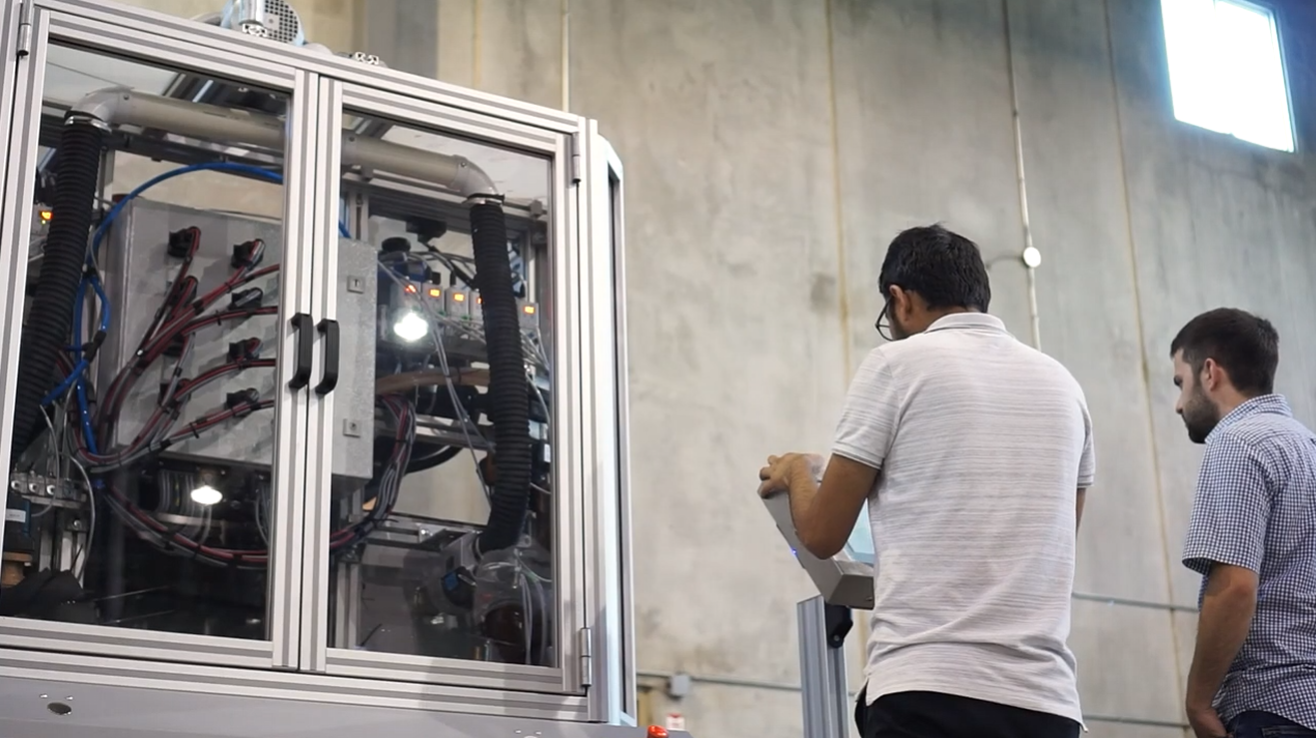
high-precision development work
ATA’s aeration measurement technologies are built for both high-precision development work and everyday diagnostics, giving engineers, technicians, and operators the tools they need to detect and manage entrained air before it causes damage.
Products
High-Performance Solutions
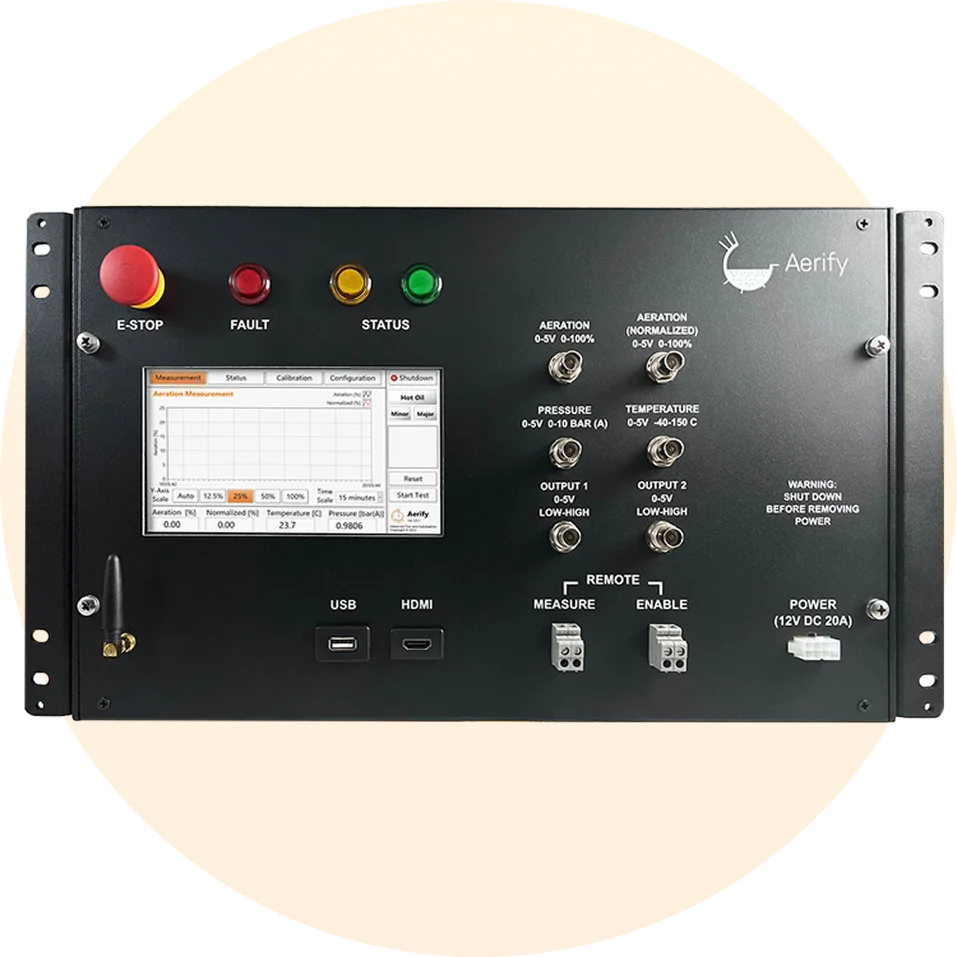
Aerify Pro™ - High Accuracy Sampling
Aeration measurement trusted by global OEMs
- Real-Time, Precision Aeration Measurement
- Automatic Sampling Rate and Pressure Control
- Connections for High-Pressure Sample Lines and Unpressurized Reservoirs
- Analog Output for Live Readings and Digital Status Outputs
- Versions for ICE, Electromobility, and Industrial Applications
- Proven in Leading OEM R&D Labs
Aerify Capture™
Custom-engineered collection system paired with a smartphone-based app
- Sensor-Free Design: No electronics, no power requirements - just pure physics and smart imaging
- Accurate Aeration Measurement: Tracks volume changes and corrects for temperature fluctuations
- Simple & Cost-Effective: Highly accessible compared to traditional method
- Field & Lab Ready: Works in test cells, R&D labs, and real-world applications

Industries we serve







Why It Matters
How can I access Aerify?
Purchase Aerify Pro™
and bolster your testing program
Hire Aerify Pro™ with a specialist for your application
Outsource Aerify Pro™ testing to our test lab
Become a Beta Tester for Aerify Capture™
Why is aeration a problem?
Loss of Lubricating Properties
Reduced Cooling Efficiency
Formation of Foam
Loss of Oil Pressure
Learn more
about
aeration
Aeration in Electrified Vehicles
An electric vehicle manufacturer’s newest motor frequently exceeds an acceptable working temperature, leading to control glitches and component failures. The manufacturer suspects aeration is compromising the thermal management properties of the oil in its motor cooling system, and needs a tool to monitor aeration in real-time With Aerify Pro™, the manufacturer confirms an increase in performance issues correlates with a rise in the percentage of aeration in the oil. The company adapts its cooling circuit to help minimize aeration and push development forward.
Aeration in Off-Highway Equipment
A construction equipment manufacturer competes fiercely against vendors who anecdotally report their novel reservoir designs and technologies reduce aeration. The manufacturer needs a way to confirm if decreasing reservoir size, and therefore dwell time, will significantly increase reduce aeration in its mobile hydraulic equipment – and it needs to generate reliable, repeatable results it can share with potential customers. With Aerify™, the manufacturer captures compelling data that proves the concept and allows it to reduce input costs increases sales
Aeration in Aerospace Applications
An aircraft manufacturer needs to understand if aeration is a problem in its turbine engine system and, if so, how aeration affects the thermodynamics and life of the oil in its systems. Given the nature of aviation, the company also needs to understand how aeration changes at various altitudes and temperatures. The manufacturer installs Aerify Pro™ in-line to monitor aeration in real-time and generate gigabytes of data that inform future research and development
Aeration in Industrial Applications
In high-throughput industries, entrained air can silently undermine production efficiency and product quality. A high-volume food processing plant faces inconsistent fill levels on its bottling line, likely due to product aeration causing foam and flow errors. Using Aerify™, engineers capture real-time data, identify where air enters the process, and adjust pump speed and piping to reduce aeration—restoring consistency and minimizing waste.
Meanwhile, a pulp and paper mill experiences variability in chemical dosing and slurry density during processing. With Aerify™, the team confirms that entrained air is distorting flow measurements and undermining control strategies. Armed with new insights, they modify their mixing process to stabilize flow and chemical ratios—boosting system reliability and reducing downtime.